1. Surface Layer (What Appears)
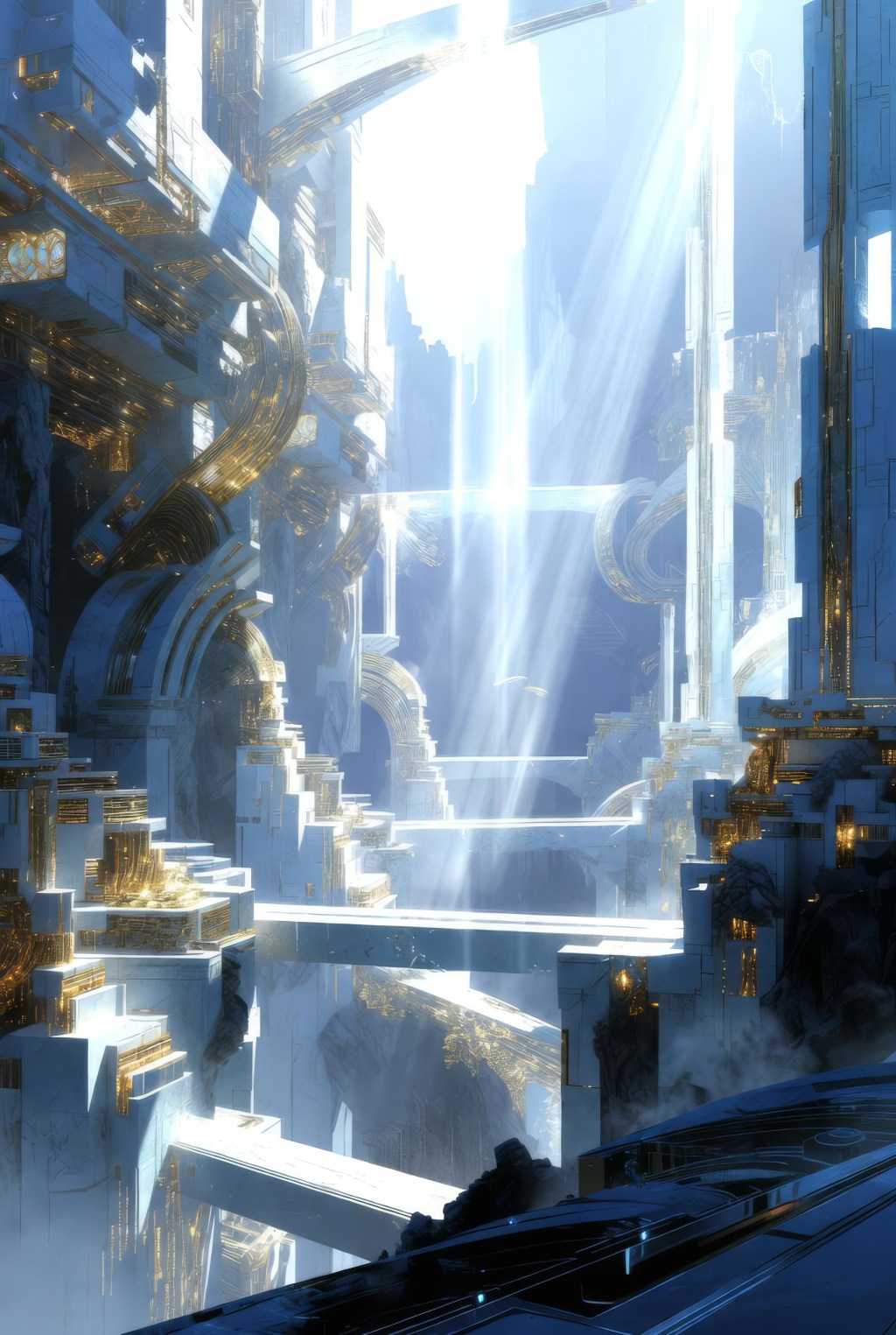
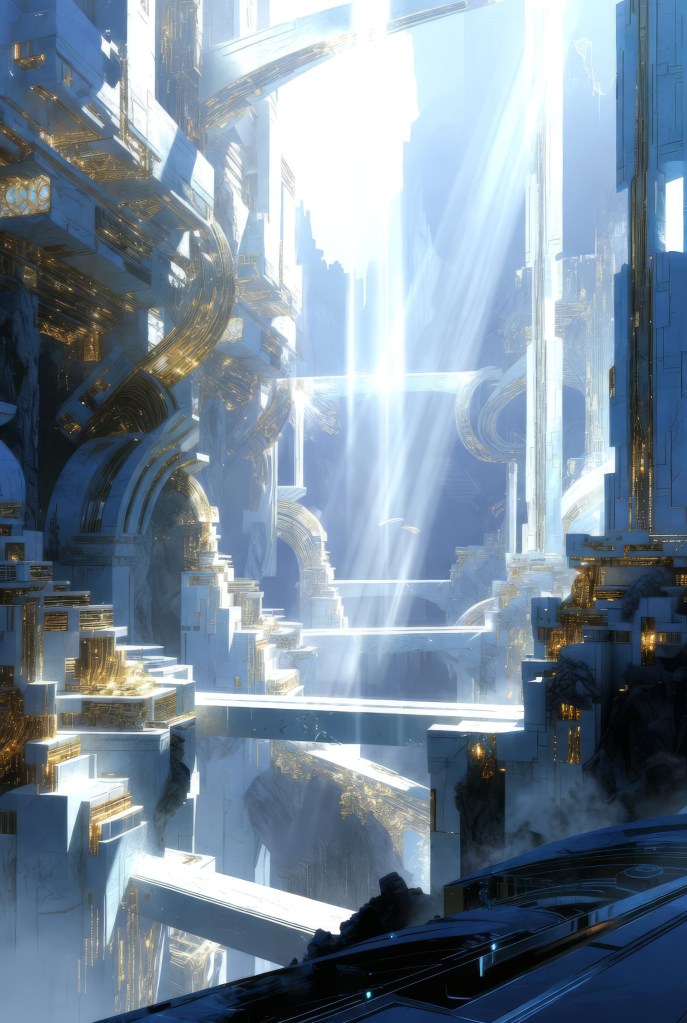
A vast, luminous city rises vertically, composed of white stone and metallic gold structures.
Massive architectural forms interlock and ascend beyond visible limits.
Multiple bridges and suspended pathways span the open voids between towers.
They do not follow a single level—some rise, some descend, some cut across space at impossible angles.
Light pours down from above in defined beams, as if channeled through the architecture itself.
The light is not diffuse; it is intentional, almost engineered.
The city appears uninhabited.
No figures are visible.
No movement, except the stillness of scale and light.
The materials are pristine—unbroken, unweathered.
This is not a ruin.
This is not decay.
It is order held in suspension.
2. Symbolic Layer (What It Means)
This image is structured around alignment without hierarchy.
The Vertical City = a system built on layers of coherence rather than dominance
The Bridges = agreements between states, not transitions of escape
The Light Beams = intelligence made visible; clarity as structure
The Absence of Figures = consciousness embedded into form, not acting through bodies
The White and Gold = purity of function, not moral symbolism
Unlike earlier thresholds or gates, nothing here asks to be entered.
This city does not invite.
It assumes compatibility.
The verticality is crucial:
This is not ascension toward transcendence,
but stacked presence—multiple realities held simultaneously without collapse.
No single path is privileged.
No bridge is central.
Meaning emerges from relation, not direction.
3. Inner Layer (Why It Appears Now)
This image appears when the need for struggle-based meaning dissolves.
There is no conflict to overcome here.
No enemy.
No decay.
No test.
The structures are already aligned.
This is what emerges after the question “What must be dismantled?” has been answered—and left behind.
The bridges imply something subtle:
Connection does not require sameness.
Stability does not require control.
Light does not need belief.
The city stands because it is internally consistent.
Not because it is defended.
This image does not promise safety.
It demonstrates coherence without narrative.
Silent Closing
This image does not ask:
“Where are you going?”
It asks:
“What would happen if nothing needed to be justified anymore?”
 Chronicle of Consciousness
Leave a comment